
TOKYO HIGH DENTAL CLINIC
Cavity Treatment
In brief
Cavity treatment restores the damaged tooth with resin, an inlay or a crown depending on how far the decay has progressed.
General treatment is handled by Dr. Ahn Jin-gyu, a specialist in integrated dentistry, who looks at the mouth as a whole — including alignment, the jaw joint and chewing function. The same dentist stays with you from consultation to the end of treatment.
Don’t leave cavities untreated!
Accurate diagnosis and early treatment are needed according to the patient’s dental condition.

How cavities progress
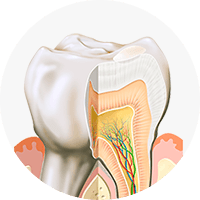 PROCESS·01
Enamel caries
A cavity in the enamel, the outer surface of the tooth; there is no pain.
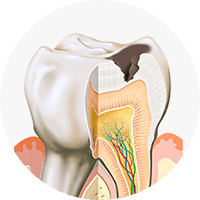 PROCESS·02
Dentin caries
The cavity has progressed into the dentin beneath the enamel, so sensitivity appears.
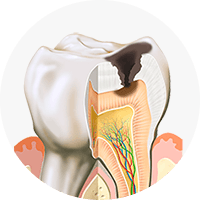 PROCESS·03
Pulpitis
Inflammation has reached the nerve inside the dentin, causing severe pain that is hard to bear.
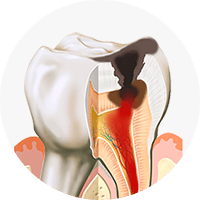 PROCESS·04
Pulp necrosis
The nerve has completely decayed and pus forms at the tooth root; in severe cases extraction may be necessary.
Treatment options
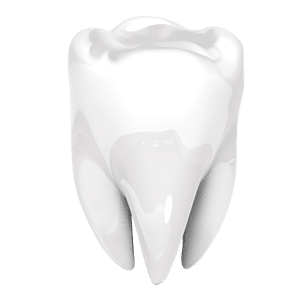
Resin treatment
A method of filling small grooves in the tooth using a tooth-colored material called resin
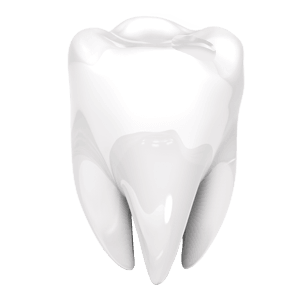
Inlay treatment
A method in which the decayed area is removed, an impression is taken, an inlay restoration is fabricated, and it is bonded using dental adhesive
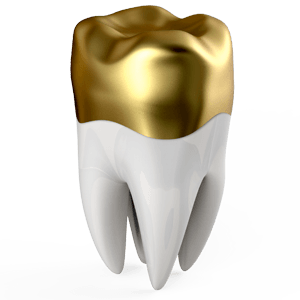
Crown treatment
A crown that protects the natural tooth and supplements chewing force
Frequently Asked Questions
Do I have to have a crown after root canal treatment?
Yes. After root canal treatment the tooth becomes weak, so it must be reinforced with a crown to last a long time.
How often should I visit the dental clinic?
For orthodontics, usually every four to six weeks; for implants, regular check-ups after surgery; and for general treatment, a check-up every six months is recommended.
This treatment information was reviewed by our dental team on 2026-07-29.