
TOKYO HIGH DENTAL CLINIC
Children & Teens
In brief
Children and teen orthodontics improves malocclusion by using facial bone growth, so timely diagnosis and treatment are essential.
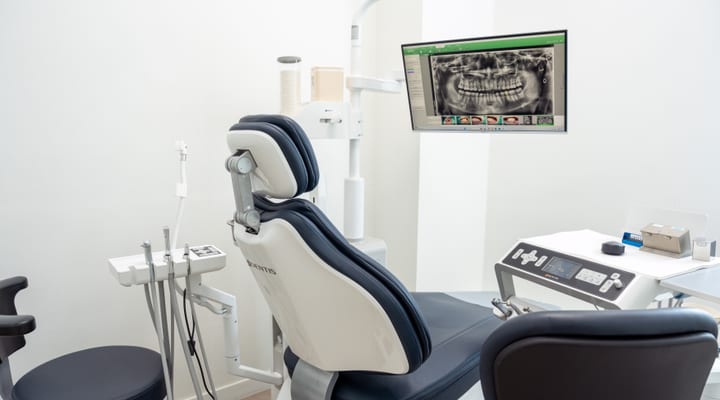
Orthodontic care at Tokyo High Dental is handled from the first consultation to the end of treatment by Dr. Ahn Jin-gyu, who completed formal orthodontic training and a doctoral course at Tokyo Medical and Dental University. Treatment is planned after reviewing skeletal, dental and facial balance on a 3D high-resolution CT (VATECH).
What is children & teen orthodontics
When the teeth are crooked or there is a mismatch between the upper and lower jaws, it is called malocclusion.
The timing of malocclusion treatment varies greatly depending on the type of malocclusion.
Unlike adults, whose facial bone growth has stopped, children and teens undergo a great deal of facial bone growth,
so malocclusion can be improved by controlling facial bone growth; therefore timely diagnosis and treatment are essential.
At the children & teen orthodontics clinic, malocclusion is diagnosed, prevented, and treated in children in the primary dentition, or in adolescents in the mixed or permanent dentition (ages 4–18).
When is the right time for children & teen orthodontic treatment?
The treatment timing differs depending on the malocclusion, and the exact timing is judged comprehensively based on the patient’s current dental development, whether puberty has begun, and the patient’s bone age,
so the most appropriate time must be found for each child.
Depending on the case, being too early or too late is not good.
Never be swayed by the opinions of those around you regarding the timing; remember that it can differ for each child.
In very early cases treatment may be recommended at ages 4–5, and in very late cases after puberty.
Advantages

Unlike orthodontic treatment in adults, it has the advantage of resolving skeletal problems by utilizing growth and development. Skeletal discrepancies that can only be resolved by surgery in adults (such as a protruding jaw) can be treated using the remaining growth, reducing the likelihood of future surgical treatment and yielding more stable results.
Today’s children are more interested in their appearance than ever. Early orthodontic treatment relieves worries about appearance during a sensitive period, helping them recover confidence and build smooth friendships.
Orthodontic treatment is not only for appearance. Malocclusion can, in some cases, cause severe periodontal disease, and early orthodontic treatment can prevent this problem, so it must be carried out.
Process
 PROCESS·01
Diagnosis and treatment plan
Using clinical photographs, radiographic examinations, cephalometric measurements, three-dimensional diagnostic models, and more, we analyze the patient’s current problems and degree of growth to determine a more accurate treatment method and timing for each child. At this point, we predict not only the treatment plan for the current state but also the state after puberty, so that we can prepare for it.
 PROCESS·02
Placement of intraoral appliances
According to the plan established through precise analysis, intraoral or extraoral appliances are placed.
 PROCESS·03
Orthodontic treatment through
regular visitsTreatment is carried out using orthodontic appliances, mostly with visits at monthly intervals.
 PROCESS·04
Retention period after orthodontics
In children and teen orthodontics, continuous evaluation of the child’s growth pattern through regular visits is also important even after treatment using appliances has ended.
Frequently Asked Questions
How long does orthodontic treatment take?
Full orthodontic treatment usually takes about one and a half to two years, and partial orthodontics often finishes within six months to a year.
Is orthodontic treatment very painful?
There is soreness or discomfort for the first few days, but you gradually get used to it. Painkillers can be prescribed if needed.
Are there food restrictions during orthodontic treatment?
Hard or sticky food (taffy, caramel, etc.) can damage the appliance, so it is best to avoid them.
This treatment information was reviewed by our dental team on 2026-07-29.